
How Many Bathroom Injuries Happen Every Year in the US, and Where Do They Happen?
There is exactly one nationally representative study of bathroom injuries in the United States. It was published in 2011 by the CDC, using 2008 emergency department data, and it has not been replaced. The number it found was 234,094 nonfatal bathroom injuries treated in American emergency rooms in a single year.
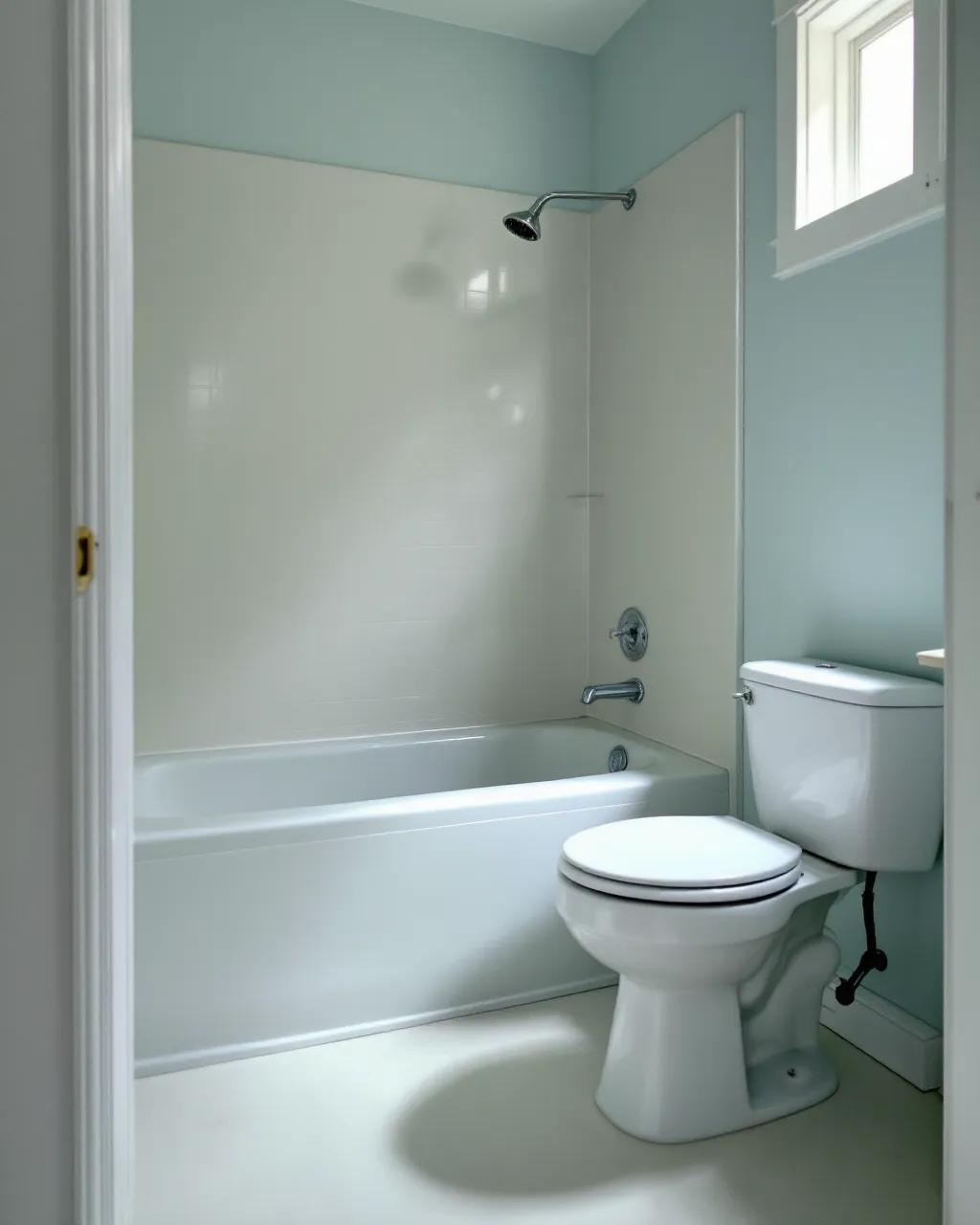
That figure comes from a study by Stevens, Haas, and Haileyesus published in the CDC’s Morbidity and Mortality Weekly Report (MMWR, June 2011). The researchers reviewed 3,339 actual emergency department records from 62 hospitals in the National Electronic Injury Surveillance System, then weighted the sample to produce national estimates. It is, in their own words, “the first report to describe the incidence and circumstances of nonfatal bathroom injuries among persons aged 15 years and older in the United States.” A search of the medical literature through 2026 has found no newer bathroom-specific national analysis.
What causes the injuries?
Falls. By a wide margin. Of the 234,094 injuries, 81.1 percent were falls. The next largest category was overexertion at 9.4 percent. Burns and scalds were 0.6 percent. Drowning or near-drowning was zero cases out of 3,339.
The bathroom’s danger is falling, not water.
Where in the bathroom do they happen?
The study coded each injury by where in the room it occurred. Two locations account for nearly everything:
- Bathtub or shower: 68.3 percent of all bathroom injuries
- Toilet: 23.4 percent
- Sink: 1.2 percent
- Elsewhere in the bathroom: 7.1 percent
That is 91.7 percent of every bathroom injury happening at two fixtures. Everything else in the room combined adds up to about eight percent.
What were people doing when it happened?
The MMWR broke down the activity at the time of injury. Bathing or showering was the single largest category at 27.5 percent. Slipping accounted for 17.3 percent. Standing up from, sitting down on, or using the toilet was 14.1 percent.
One finding stands out. Getting out of the tub or shower caused 9.8 percent of all bathroom injuries, while getting in caused 2.2 percent. Same step. Same tub wall. Same height. The CDC’s own explanation: on the way in, the floor and the fixtures are not wet yet.
How serious are they?
Not minor. The most common injury was contusions and abrasions at 29.3 percent, but fractures were 17.4 percent and lacerations were 15 percent. The most commonly injured body part was the head or neck at 31.2 percent.
About 13.7 percent of people who went to an emergency room for a bathroom injury were admitted to the hospital. That is roughly one in eight.
How does the bathroom compare to the rest of the house?
A separate study published in the American Journal of Lifestyle Medicine by Moreland, Kakara, and colleagues (Moreland et al., 2020) looked at where in the home older adults fell. Using 2015 emergency department data, they found the top three locations for at-home falls were the bedroom (25.0 percent), the stairs (22.9 percent), and the bathroom (22.7 percent).
Those three rooms finish within about two points of each other. The difference is floor space. The bedroom and the staircase are large parts of a house. The bathroom is typically the smallest room in it, and it takes 22.7 percent of the falls.
The bathroom’s share also climbs with age. At 65 to 74, it is 19.8 percent of at-home falls. At 85 and older, it is 26.1 percent.
Our Warranty
Lifetime warranty covering plumbing, wall systems, fixtures, shower pan, doors and installation. Transferable to a new owner, backed by RenewItHQ, documented in writing. Only exclusion is customer damage.
What does this have to do with how a bathroom is built?
Almost every number above points to the same two things: a surface that gets wet and a step that has to be cleared while it is. The tub wall is the single largest structural hazard in the room, and getting over it on the way out is four and a half times more dangerous than getting over it on the way in.
A low-threshold walk-in shower removes the tub wall from the room. Grab bars give the person something rated to hold. A seat means standing for the full shower is a choice, not a requirement. None of these are complicated ideas. They are straightforward responses to what the data says is actually happening.
The data also says the toilet is 23.4 percent of the problem and climbing fast with age. That part of the bathroom is the least addressed by the remodeling industry, and we are not going to pretend otherwise.
Where the numbers come from
The primary source for bathroom-specific injury data is Stevens JA, Haas EN, Haileyesus T, Nonfatal Bathroom Injuries Among Persons Aged ≥15 Years — United States, 2008, published in the CDC’s MMWR on June 10, 2011. The at-home fall location data is from Moreland BL et al., A Descriptive Analysis of Location of Older Adult Falls That Resulted in Emergency Department Visits in the United States, 2015, published in the American Journal of Lifestyle Medicine, 2020. The CDC’s current older adult falls data is at cdc.gov/falls/data-research.
Talk It Through in Your Own Bathroom
We look at the space, answer the questions this guide raised, and explain the options that fit your home.

Ready When You Are