
Which Caulk Belongs in a Shower, and How Long Should It Last?
The joint where a shower wall meets the pan is the busiest in the room: it is permanently wet and it moves. Filled with 100% silicone it lasts 20 to 30 years or more. Filled with acrylic latex it lasts 2 to 5. The tubes are the same size, sit on the same shelf, and cost about the same.
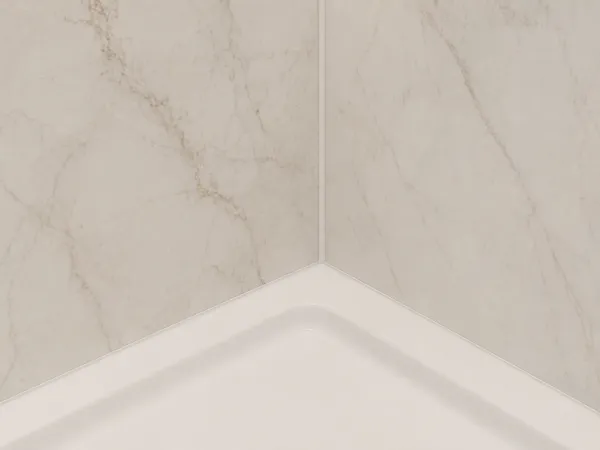
There is no photograph that shows the difference between the two products, and that is the whole problem. Out of the tube they look identical. They still look identical after a year. You find out which one you paid for somewhere around year three, long after the invoice is settled.
What is the actual difference?
Set side by side, the specifications separate cleanly:
- Waterproofing — 100% silicone is genuinely waterproof; acrylic latex is water-resistant only
- Mould resistance — excellent versus poor to fair
- Joint movement — ±25 to 50% versus ±7 to 12%
- Durability — 20 to 30+ years versus 2 to 5
Silicone stays permanently flexible and adheres to non-porous surfaces — acrylic, glass, porcelain. Acrylic latex dries hard, shrinks, and then cracks along the joint and lifts at the edges. That brittle, slightly yellow bead everyone has seen in an older bathroom is what the end of its life looks like.
Why does the movement number matter more than it looks?
That ±25 to 50% figure is joint movement capability: how far the joint can open and close without the seal tearing.
And showers move. Structures settle, timber gains and sheds moisture across an East Texas summer, and a pan deflects a little under the weight of somebody standing on it. When a sealant rated for ±7 to 12% lets go, it is not defective — the joint simply travelled further than that product was ever specified to follow.
Once it tears, water passes behind it, and the dark line reappearing every week is the consequence rather than the fault. At that point cleaning it is just exercise.
What should be printed on the tube?
Three things, and they are all on the label if you turn it round:
- “100% silicone” — not “siliconized.” Siliconized acrylic is acrylic with silicone added, and it lands in a 5 to 10 year band rather than the 20 to 30 one.
- Neutral cure, specified for kitchen and bath.
- ASTM C920 — the sealant performance standard. A serious product prints that code.
Add a fourth if you are comparing two good products: a mildew-resistance warranty stated in years. Premium silicones contain biocides and the manufacturers put a number on them — commonly seven years, ten years, twenty years, or a lifetime mould guarantee at the top of the range. A product that will not state a number is telling you something.
What is the difference between water-ready and cured?
This is the distinction almost nobody makes, and it is where a correctly chosen product still fails.
Silicone skins over in ten to thirty minutes. It becomes water-ready somewhere between thirty minutes and two hours depending on the product. Full mechanical cure is typically twenty-four hours and can run longer, because silicone cures by drawing moisture out of the air and works from the outside inward.
So a bead that is touch-dry is not a bead that is finished. Running a shower the same evening because the surface feels solid is how a joint that was applied correctly fails anyway — and when it does, the product gets the blame rather than the schedule.
Where does caulk go, and where does grout not?
Per TCNA EJ171, every change of plane in a shower gets caulk rather than grout. Wall to wall. Wall to pan. Around a niche opening.
Corners move; grout does not bend, so it fractures — and a fractured joint at a change of plane is simply a way into the wall. If there is grout where two walls meet in your own shower, nobody chose that for its appearance.
It is worth saying that our wall system has no grout anywhere in it, which removes the question at the corners entirely. The joints that remain are sealed ones, and they are the joints this article is about.
Our Warranty
Lifetime warranty covering plumbing, wall systems, fixtures, shower pan, doors and installation. Transferable to a new owner, backed by RenewItHQ, documented in writing. Only exclusion is customer damage.
What goes on our jobs?
GE Supreme Silicone Kitchen & Bath. It is a 100% silicone, neutral-cure sealant meeting ASTM C920, water-ready in about thirty minutes.
Ask your Design Consultant to show you the tube and read the label with you — every specification in this article is printed on it, which is the point of choosing a product by its standard rather than by its shelf position.
What can you do about the bead you already have?
If the black is on the surface, it will clean. If the black is inside the bead, it will not, and no amount of scrubbing changes that — the mould is behind a material that is no longer sealed. That bead needs cutting out and replacing rather than cleaning.
Two habits extend the life of a good one considerably:
- Run the extractor fan during the shower and for a while afterwards
- Wipe the joint down after the last shower of the day
- Keep abrasive pads off it — scratches in silicone hold soap and give mould somewhere to sit
None of that saves the wrong product. It does mean the right one reaches the far end of its published range instead of the near end.
Talk It Through in Your Own Bathroom
We look at the space, answer the questions this guide raised, and explain the options that fit your home.

Ready When You Are